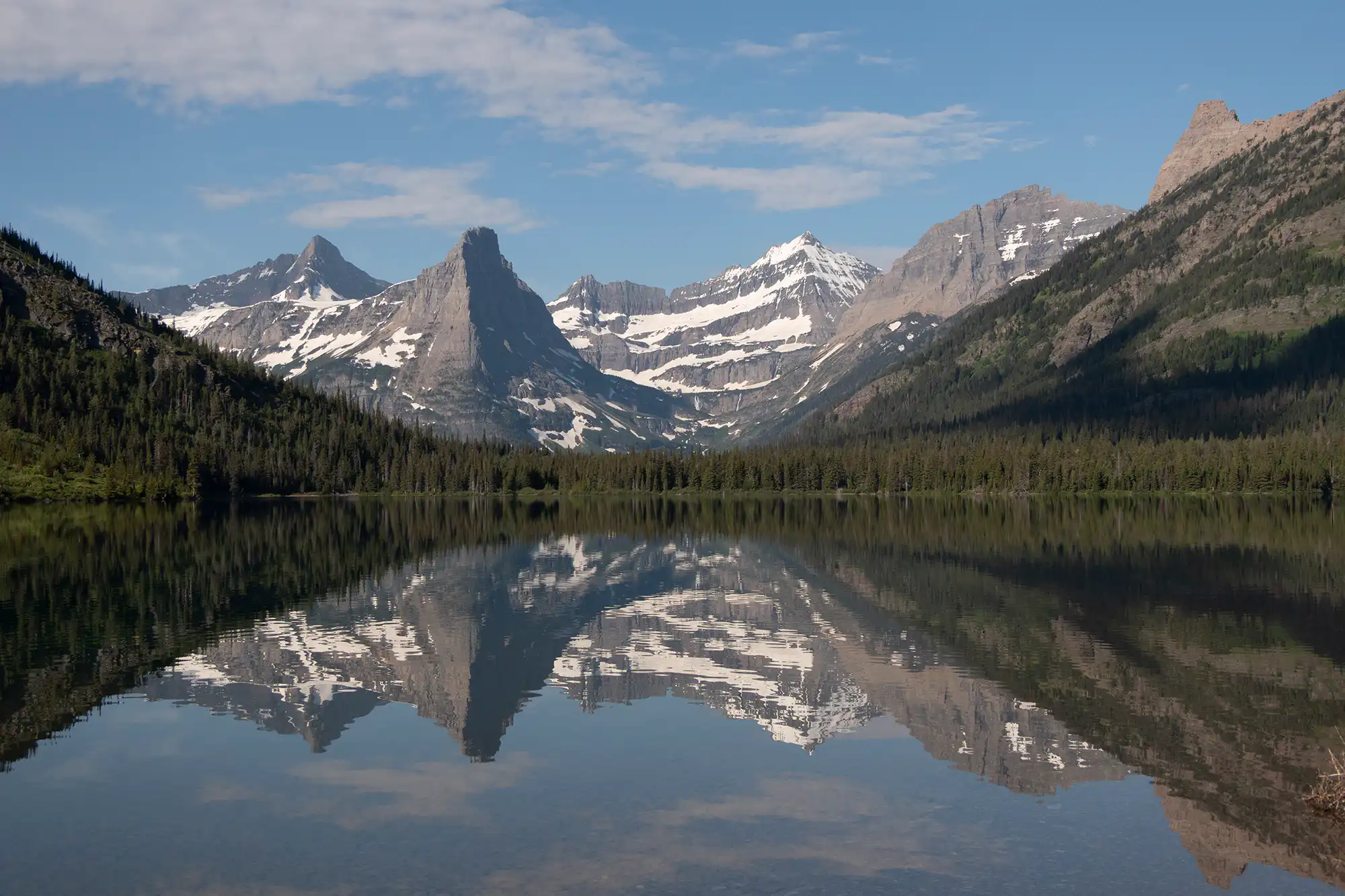
The Belly River area of Glacier National Park is such a fantastic background location. We headed out to do Common Loon surveys at Cosley Lake and Glenns Lake which is up in the Mokowanis River drainage. Perfect weather, wildflowers, big mountains, a roaring waterfall, and pristine lakes (with not TOO many mosquitos) made for a fantastic backpack.
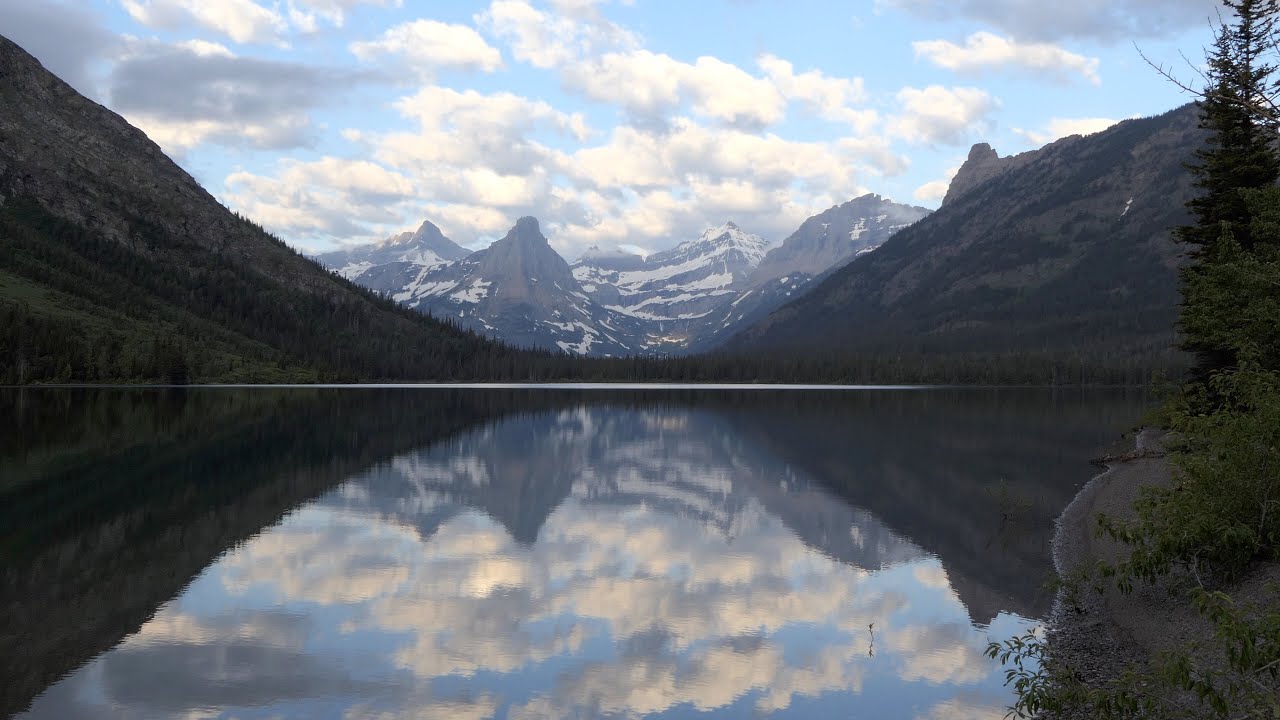
It’s been some time since we swapped out the day packs for the heavier backpacks, but we did just that. It doesn’t get much better than the Belly River area and there were a few lakes that needed to be surveyed for Glacier National Park’s citizen science effort to document them.
We drove around to the far northeast corner of the park at the US-Canada border and hit the trail.
The first couple miles of trail is a downhill affair through the trees as we descended Lee Ridge. The mosquitos were very present and made me a little nervous about the trip. Thankfully as the forest gave way to open meadows, the bugs significantly decreased and I knew we were in for a great trip.
We bounced between the stands of aspens, open meadows, and spruce/fir forests as we worked our way to the junction at the Belly River Ranger Station. A Sandhill Crane pair foraged while countless other birds chirped, sang, and flitted about. The wildflowers were on full display and the mountains… oh those mountains…. so beautiful.
We came alongside the Belly River as it was running at a great early season pace. Along the way we saw where grizzlies had peeled the bark back on aspen trees and where a big wolf left its track in the mud.
After about six miles we came to the junction that headed west towards the Mokowanis River drainage where we turned and crossed over the Belly River on the shaky cable bridge that spans its waters. The trail then climbs up on a ridge giving fantastic views looking up the Belly River drainage as well as down onto the ranger station.
Gros Ventre Falls was roaring and we heard it before we saw it. We took the spur trail down to it and enjoyed the refreshing spray coming off the whitewater as it crashed into the turquoise pool.
Not long after the falls we got our first glimpse of the lake and we quickly made it to camp. After hanging our food and setting up our tent, we went to the shoreline to look for Common Loons. I spotted one foraging across the lake and we watched it as it worked its way towards us and then out of site near the outlet of the lake.
Once it disappeared, we headed down towards the outlet to see if we could see it again. While we didn’t get another view that evening, we did find a large bull moose feeding on some willows in an island where the river braided.
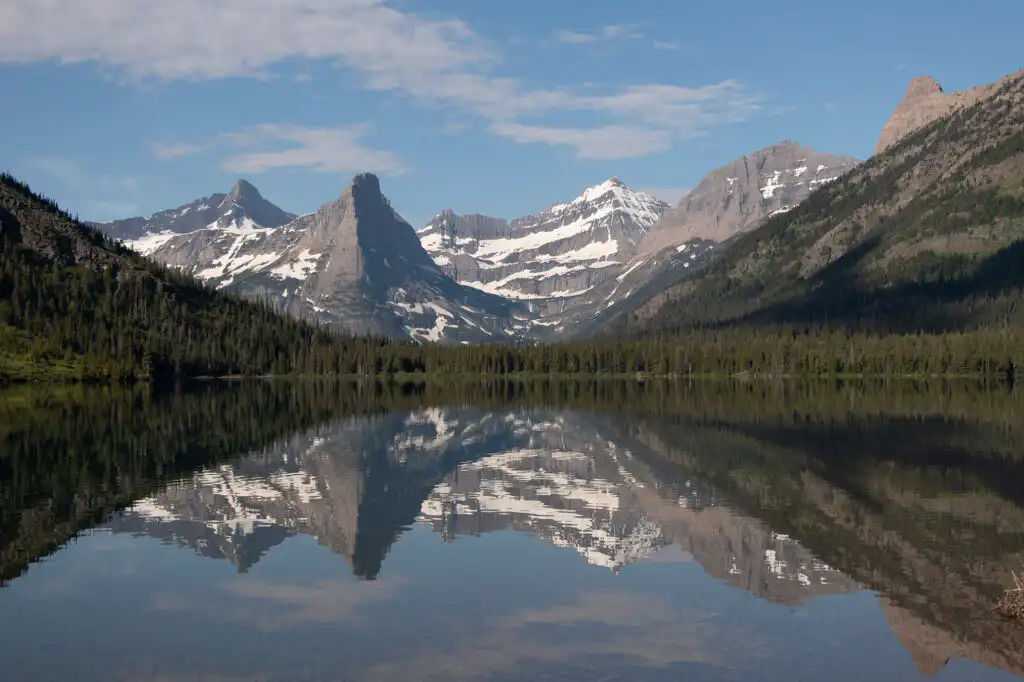
After a night’s sleep we awoke to a mirror calm lake. We made breakfast and chatted with others at camp. I heard a rustle and what appeared to be the same bull moose walked up the shoreline about 20 yards from camp and passed all of the sites on his way along the lake!
I spotted a pair of loons and watched them for a bit before they took off, then we packed up and headed further up the drainage to Glenns Lake.
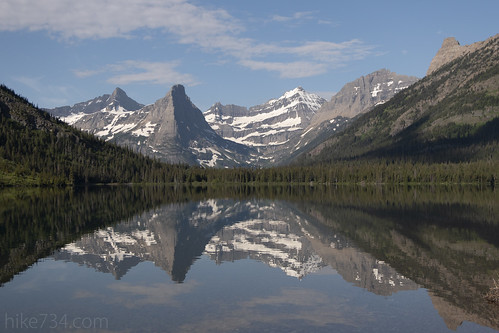
While the lakeshore is very accessible at Cosley, it’s a bit more of a challenge at Glenns Lake, especially with higher water. From the the foot of the lake we spied one loon at a distance, then continued to the head of the lake and didn’t see any more. The views at the head are amazing looking up at Pyramid Peak, but once again, the dense vegetation makes it hard to get views… at least with the lakes at the level that they were.
We turned around and headed back. There were Trumpeter Swans at the foot of Glenns Lake which was a fun bonus. Back at camp we had a late lunch, tore down camp and headed out. More birds, more wildflowers, the Sandhill Cranes, and then the pesky mosquitos as we ascended the 900 vertical feet back up to our cars.
On the way home we had delicious burgers at Two Sisters Cafe then found showers and cotton sheets after a magical couple of days in the backcountry.



Leave a Reply